Description
Gudi Padwa is celebrated as the Marathi New Year and the first day of the Chaitra month, marking the arrival of spring, the harvest season, and the victory of good over evil. It commemorates Lord Brahma creating the universe, Lord Rama’s return to Ayodhya, and the victory of the Shalivahan calendar.
🌼 Gudi Padwa – Cultural Significance & Ritual Guide
🌺 Spiritual & Cultural Importance
Gudi Padwa marks the beginning of the Hindu lunar New Year, celebrated on the first day of the Chaitra month, especially across Maharashtra. According to Hindu tradition, this sacred day is believed to be the time when Lord Brahma created the universe, symbolizing the start of time and cosmic order.
The word “Gudi” refers to a beautifully decorated cloth hoisted outside homes as a symbol of victory, prosperity, and divine blessings. The festival represents renewal, success, and the triumph of righteousness.
It is also associated with several legendary events:
-
The victorious return of Lord Shri Ram to Ayodhya after defeating Ravana, when citizens raised flags to celebrate joy and triumph.
-
The victory of King Shalivahana over his enemies, commemorated by hoisting a flag of success.
-
Historical significance marking the beginning of the Shalivahana Shaka era.
Thus, Gudi Padwa symbolizes new beginnings, courage, and spiritual upliftment.
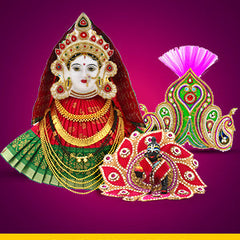
Add cultural charm and festive vibrance to your celebrations with this elegant traditional Gudhi cloth.
🪔 Step-by-Step Ritual Procedure
1️⃣ Preparation of the Area
Clean the selected space thoroughly. Draw a Swastik rangoli on the ground and offer turmeric (haldi) and vermilion (kumkum) at its center.
2️⃣ Setting the Base
Place a wooden plank or stand (chowki/channel) where the rangoli is drawn. Spread a small quantity of rice over it as a sacred base.
3️⃣ Preparing the Bamboo Staff
Take a medium-length bamboo stick and securely fix it into the rice base. This stick represents strength and stability.
4️⃣ Decorating the Gudi
Tie a clean and new cloth or saree (preferably silk or traditional fabric) at the top of the bamboo. Add:
-
Fresh flowers
-
Neem leaves
-
Sugar garland (gathi)
-
Mango leaves
Wrap them neatly with thread.
5️⃣ Placing the Kalash (Gadu)
Position a clean silver, copper, or bronze pot upside down at the top of the decorated bamboo. This symbolizes divine protection and abundance.
6️⃣ Offering Naivedya
Offer sweets such as Puran Poli as prasad. The Gudi is worshipped shortly after sunrise, invoking divine blessings and positive energy.
🌞 Essence of the Festival
Gudi Padwa is not only about celebration but also reflection. It reminds us to renew our intentions, embrace righteousness, and welcome prosperity into our lives with gratitude and faith.
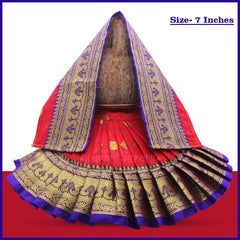
Design: Made of high quality khun silk fabric. It has multiple pleats which gives it beautiful look.
Color: Green
Size: 36 inches length
Weight: 130 gms