
Aai Mauli And Adi-Laxmi Devi Face
-


Mauli Mukhota for Mahalaxmi Aai – Varalakshmi Puja, Navratri & Margashirsha Guruwar Vrat & Kalash Sthapana For Devi Puja Mandani Special Puja Home Temple Decoration(Devi Mukh Height: 10 Inches)
Margashirsha Month: Significance, Margashirsha Guruwar Vrat, Mahalaxmi Puja Vidhi & Traditional Rituals Bring home the beautiful Mauli Mukhota for Mahalaxmi Aai and add a traditional devotional touch to your puja celebrations. Perfect for Varalakshmi Puja, Navratri, Margashirsha Guruwar and home temple decoration. Adorn it with beautiful vastra, jewellery and flowers to create a divine and elegant look. Introduction to Margashirsha Month Margashirsha, also known as Agrahayana, is considered one of the most auspicious months in the Hindu calendar. It generally falls during November and December and holds great spiritual significance among Hindu devotees. In Maharashtra, Margashirsha Month is especially celebrated for the worship of Goddess Mahalaxmi. The four Thursdays of this sacred month are popularly observed as Margashirsha Guruwar, dedicated to Mahalaxmi Aai. Devotees observe traditional puja rituals, fasting, mantra chanting and prayers to seek the blessings of Goddess Mahalaxmi for happiness, prosperity, financial stability and family well-being. Margashirsha is also considered an ideal time for spiritual activities, charity, devotion and decorating the home temple with traditional puja accessories. Spiritual Significance of Margashirsha Month Margashirsha holds a special place in Hindu religious traditions. It is regarded as an auspicious period for worship, prayer, spiritual discipline and charitable activities. According to Hindu tradition, Lord Krishna describes Margashirsha as the most glorious among months in the Bhagavad Gita (Chapter 10, Verse 35). During this sacred month, devotees traditionally: Perform daily Mahalaxmi Puja. Observe Margashirsha Guruwar Vrat. Decorate their home temples with traditional decorations. Chant Mahalaxmi mantras and prayers. Offer fresh flowers, fruits and traditional naivedya. Read religious texts and vrat kathas. Practise charity, gratitude and acts of kindness. These practices help devotees strengthen their spiritual connection and welcome positivity and devotion into their homes. Margashirsha Guruwar – Importance of Mahalaxmi Puja The Thursdays of Margashirsha Month are traditionally dedicated to Goddess Mahalaxmi, the divine Goddess of wealth, prosperity, abundance and good fortune. In Maharashtra, many families observe the Margashirsha Maha Lakshmi Vrat, commonly performed over four consecutive Thursdays. On these auspicious days, devotees worship Mahalaxmi Aai with traditional rituals, flowers, kumkum, haldi, sweets and other sacred offerings. Families also decorate the Goddess with beautiful vastra, jewellery and traditional shringar accessories. The vrat is observed with devotion and faith, seeking blessings for: Happiness and harmony in the family. Prosperity and abundance. Financial well-being and stability. Peace and positivity at home. Health and overall family welfare. The exact puja procedure and fasting practices may vary according to family traditions and regional customs. Traditional Margashirsha Mahalaxmi Puja Vidhi Devotees can follow these traditional steps to perform Mahalaxmi Puja during Margashirsha Guruwar. Clean the Home and Puja Area: Begin by cleaning the house and preparing a clean, peaceful space for worship. Decorate the Chaurang: Place a traditional chaurang and cover it with a beautiful decorative cloth. Prepare the Kalash: Arrange the Kalash according to your family traditions and customary rituals. Place Mahalaxmi Mukhota or Idol: Respectfully place the Mahalaxmi idol or Mukhota in the prepared puja arrangement. Perform Traditional Shringar: Decorate Mahalaxmi Aai with beautiful vastra, flowers, jewellery and traditional ornaments. Offer Puja Samagri: Offer haldi, kumkum, akshat, fresh flowers, fruits and traditional sweets. Read the Vrat Katha: Recite or listen to the Margashirsha Guruwar Vrat Katha with devotion. Chant Mantras and Perform Aarti: Chant Mahalaxmi mantras and perform the traditional Aarti. Distribute Prasad: Offer naivedya to the Goddess and distribute prasad among family members. Following these rituals with devotion helps create a peaceful and spiritually uplifting atmosphere at home. Mahalaxmi Mantra for Margashirsha Guruwar Chanting Mahalaxmi mantras is an important part of Margashirsha Guruwar Puja. Devotees recite the following mantra to express their devotion and seek the blessings of Goddess Mahalaxmi. महालक्ष्मी मंत्र: ॐ श्रीं महालक्ष्म्यै नमः॥ English Transliteration: Om Shreem Mahalakshmyai Namah. Meaning: I offer my respectful salutations to Goddess Mahalaxmi and seek her divine blessings for prosperity, abundance, happiness and well-being. Devotees can chant this mantra during daily puja or while performing Mahalaxmi worship on the four Thursdays of Margashirsha. Traditional Margashirsha Rituals and Offerings During the four auspicious Thursdays, devotees follow various traditional practices as part of Mahalaxmi worship. Some commonly followed rituals include: Taking an early morning bath before beginning the puja. Wearing clean and traditional clothes. Decorating the puja area with rangoli and flowers. Offering fresh flowers, haldi, kumkum and akshat. Preparing homemade sweets and traditional naivedya. Observing fasting according to family customs. Reading the Mahalaxmi Vrat Katha. Chanting devotional mantras and performing Aarti. Distributing prasad among family members and guests. These rituals reflect devotion, gratitude and the importance of maintaining traditional values. Importance of Mahalaxmi Mukhota in Margashirsha Puja Decorating Mahalaxmi Aai is one of the most beautiful traditions of Margashirsha Guruwar celebrations in many Maharashtrian households. A Mahalaxmi Mukhota represents the traditional appearance of Goddess Mahalaxmi during the four Thursday pujas. It is beautifully adorned with traditional vastra, jewellery, flowers and shringar accessories. The Mauli Mukhota for Mahalaxmi Aai adds a traditional and devotional touch to your home temple. It helps devotees create an attractive and meaningful puja arrangement while following their family traditions. Whether you are observing Margashirsha Maha Lakshmi Vrat or preparing for a special Thursday puja, a beautifully decorated Mahalaxmi Mukhota can become the centrepiece of your traditional worship arrangement. How to Prepare Your Home Temple for Margashirsha Guruwar A beautifully arranged home temple enhances the devotional atmosphere during Margashirsha Month. You can prepare a traditional Mahalaxmi puja setup using the following accessories: Mauli Mukhota for Mahalaxmi Aai: The traditional focal point of your Mahalaxmi puja arrangement. Traditional Chaurang: A decorative wooden platform for placing the Goddess. Mahalaxmi Vastra: Beautiful traditional clothing for decorating the Mukhota. Shringar Accessories: Traditional jewellery and ornaments for Goddess decoration. Kalash: An essential element of traditional Hindu puja arrangements. Fresh Flowers: Lotus and other flowers for devotional offerings. Kamal Gatta Mala: Traditionally used for Mahalaxmi mantra chanting. Diya and Incense: For creating a peaceful and devotional atmosphere. Haldi and Kumkum: Important traditional puja offerings. Rangoli and Puja Thali: To complete the traditional festive decoration. Combining these traditional elements creates a beautiful and spiritually welcoming space for Margashirsha Guruwar celebrations. Celebrate the Auspicious Margashirsha Month with Bappa Morya Stores Margashirsha is a special occasion to worship Goddess Mahalaxmi with devotion, faith and traditional rituals. The four Thursdays offer families an opportunity to come together, perform puja, chant mantras and celebrate the blessings of Mahalaxmi Aai. Prepare your home temple with traditional puja essentials and beautiful shringar accessories to make every Margashirsha Guruwar memorable. Bring home the Mauli Mukhota for Mahalaxmi Aai from Bappa Morya Stores and add a traditional devotional touch to your Margashirsha celebrations. May Goddess Mahalaxmi bless every home with happiness, prosperity, peace, abundance and divine grace. Made from quality fiber, the Devi Face is beautifully decorated with a traditional Shringar Base, featuring exquisite Zardosi craftsmanship, vibrant colours, delicate Moti work and decorative stone embellishments Dimensions: 10inches (HEIGHT) x 5 inches (WIDTH)Weight : 325 GramsQuantity: 1 pcs
Rs. 2,850.00 Rs. 2,150.00
-


Aai Mauli Mukhota for Mahalaxmi Aai – Varalakshmi Puja, Navratri & Home Temple Decoration (10 Inch Devi Mukh)
Margashirsha Month: Significance, Margashirsha Guruwar Vrat, Mahalaxmi Puja Vidhi & Traditional Rituals Bring home the beautiful Mauli Mukhota for Mahalaxmi Aai and add a traditional devotional touch to your puja celebrations. Perfect for Varalakshmi Puja, Navratri, Margashirsha Guruwar and home temple decoration. Adorn it with beautiful vastra, jewellery and flowers to create a divine and elegant look. Introduction to Margashirsha Month Margashirsha, also known as Agrahayana, is considered one of the most auspicious months in the Hindu calendar. It generally falls during November and December and holds great spiritual significance among Hindu devotees. In Maharashtra, Margashirsha Month is especially celebrated for the worship of Goddess Mahalaxmi. The four Thursdays of this sacred month are popularly observed as Margashirsha Guruwar, dedicated to Mahalaxmi Aai. Devotees observe traditional puja rituals, fasting, mantra chanting and prayers to seek the blessings of Goddess Mahalaxmi for happiness, prosperity, financial stability and family well-being. Margashirsha is also considered an ideal time for spiritual activities, charity, devotion and decorating the home temple with traditional puja accessories. Spiritual Significance of Margashirsha Month Margashirsha holds a special place in Hindu religious traditions. It is regarded as an auspicious period for worship, prayer, spiritual discipline and charitable activities. According to Hindu tradition, Lord Krishna describes Margashirsha as the most glorious among months in the Bhagavad Gita (Chapter 10, Verse 35). During this sacred month, devotees traditionally: Perform daily Mahalaxmi Puja. Observe Margashirsha Guruwar Vrat. Decorate their home temples with traditional decorations. Chant Mahalaxmi mantras and prayers. Offer fresh flowers, fruits and traditional naivedya. Read religious texts and vrat kathas. Practise charity, gratitude and acts of kindness. These practices help devotees strengthen their spiritual connection and welcome positivity and devotion into their homes. Margashirsha Guruwar – Importance of Mahalaxmi Puja The Thursdays of Margashirsha Month are traditionally dedicated to Goddess Mahalaxmi, the divine Goddess of wealth, prosperity, abundance and good fortune. In Maharashtra, many families observe the Margashirsha Maha Lakshmi Vrat, commonly performed over four consecutive Thursdays. On these auspicious days, devotees worship Mahalaxmi Aai with traditional rituals, flowers, kumkum, haldi, sweets and other sacred offerings. Families also decorate the Goddess with beautiful vastra, jewellery and traditional shringar accessories. The vrat is observed with devotion and faith, seeking blessings for: Happiness and harmony in the family. Prosperity and abundance. Financial well-being and stability. Peace and positivity at home. Health and overall family welfare. The exact puja procedure and fasting practices may vary according to family traditions and regional customs. Traditional Margashirsha Mahalaxmi Puja Vidhi Devotees can follow these traditional steps to perform Mahalaxmi Puja during Margashirsha Guruwar. Clean the Home and Puja Area: Begin by cleaning the house and preparing a clean, peaceful space for worship. Decorate the Chaurang: Place a traditional chaurang and cover it with a beautiful decorative cloth. Prepare the Kalash: Arrange the Kalash according to your family traditions and customary rituals. Place Mahalaxmi Mukhota or Idol: Respectfully place the Mahalaxmi idol or Mukhota in the prepared puja arrangement. Perform Traditional Shringar: Decorate Mahalaxmi Aai with beautiful vastra, flowers, jewellery and traditional ornaments. Offer Puja Samagri: Offer haldi, kumkum, akshat, fresh flowers, fruits and traditional sweets. Read the Vrat Katha: Recite or listen to the Margashirsha Guruwar Vrat Katha with devotion. Chant Mantras and Perform Aarti: Chant Mahalaxmi mantras and perform the traditional Aarti. Distribute Prasad: Offer naivedya to the Goddess and distribute prasad among family members. Following these rituals with devotion helps create a peaceful and spiritually uplifting atmosphere at home. Mahalaxmi Mantra for Margashirsha Guruwar Chanting Mahalaxmi mantras is an important part of Margashirsha Guruwar Puja. Devotees recite the following mantra to express their devotion and seek the blessings of Goddess Mahalaxmi. महालक्ष्मी मंत्र: ॐ श्रीं महालक्ष्म्यै नमः॥ English Transliteration: Om Shreem Mahalakshmyai Namah. Meaning: I offer my respectful salutations to Goddess Mahalaxmi and seek her divine blessings for prosperity, abundance, happiness and well-being. Devotees can chant this mantra during daily puja or while performing Mahalaxmi worship on the four Thursdays of Margashirsha. Traditional Margashirsha Rituals and Offerings During the four auspicious Thursdays, devotees follow various traditional practices as part of Mahalaxmi worship. Some commonly followed rituals include: Taking an early morning bath before beginning the puja. Wearing clean and traditional clothes. Decorating the puja area with rangoli and flowers. Offering fresh flowers, haldi, kumkum and akshat. Preparing homemade sweets and traditional naivedya. Observing fasting according to family customs. Reading the Mahalaxmi Vrat Katha. Chanting devotional mantras and performing Aarti. Distributing prasad among family members and guests. These rituals reflect devotion, gratitude and the importance of maintaining traditional values. Importance of Mahalaxmi Mukhota in Margashirsha Puja Decorating Mahalaxmi Aai is one of the most beautiful traditions of Margashirsha Guruwar celebrations in many Maharashtrian households. A Mahalaxmi Mukhota represents the traditional appearance of Goddess Mahalaxmi during the four Thursday pujas. It is beautifully adorned with traditional vastra, jewellery, flowers and shringar accessories. The Mauli Mukhota for Mahalaxmi Aai adds a traditional and devotional touch to your home temple. It helps devotees create an attractive and meaningful puja arrangement while following their family traditions. Whether you are observing Margashirsha Maha Lakshmi Vrat or preparing for a special Thursday puja, a beautifully decorated Mahalaxmi Mukhota can become the centrepiece of your traditional worship arrangement. How to Prepare Your Home Temple for Margashirsha Guruwar A beautifully arranged home temple enhances the devotional atmosphere during Margashirsha Month. You can prepare a traditional Mahalaxmi puja setup using the following accessories: Mauli Mukhota for Mahalaxmi Aai: The traditional focal point of your Mahalaxmi puja arrangement. Traditional Chaurang: A decorative wooden platform for placing the Goddess. Mahalaxmi Vastra: Beautiful traditional clothing for decorating the Mukhota. Shringar Accessories: Traditional jewellery and ornaments for Goddess decoration. Kalash: An essential element of traditional Hindu puja arrangements. Fresh Flowers: Lotus and other flowers for devotional offerings. Kamal Gatta Mala: Traditionally used for Mahalaxmi mantra chanting. Diya and Incense: For creating a peaceful and devotional atmosphere. Haldi and Kumkum: Important traditional puja offerings. Rangoli and Puja Thali: To complete the traditional festive decoration. Combining these traditional elements creates a beautiful and spiritually welcoming space for Margashirsha Guruwar celebrations. Celebrate the Auspicious Margashirsha Month with Bappa Morya Stores Margashirsha is a special occasion to worship Goddess Mahalaxmi with devotion, faith and traditional rituals. The four Thursdays offer families an opportunity to come together, perform puja, chant mantras and celebrate the blessings of Mahalaxmi Aai. Prepare your home temple with traditional puja essentials and beautiful shringar accessories to make every Margashirsha Guruwar memorable. Bring home the Mauli Mukhota for Mahalaxmi Aai from Bappa Morya Stores and add a traditional devotional touch to your Margashirsha celebrations. May Goddess Mahalaxmi bless every home with happiness, prosperity, peace, abundance and divine grace. Made from quality fiber, the Devi Face is beautifully decorated with a traditional Shringar Base, featuring exquisite Zardosi craftsmanship, vibrant colours, delicate Moti work and decorative stone embellishments Dimensions: 10inches (HEIGHT) x 5 inches (WIDTH)Weight : 270 GramsQuantity: 1 pcs
Rs. 2,850.00 Rs. 2,150.00
-
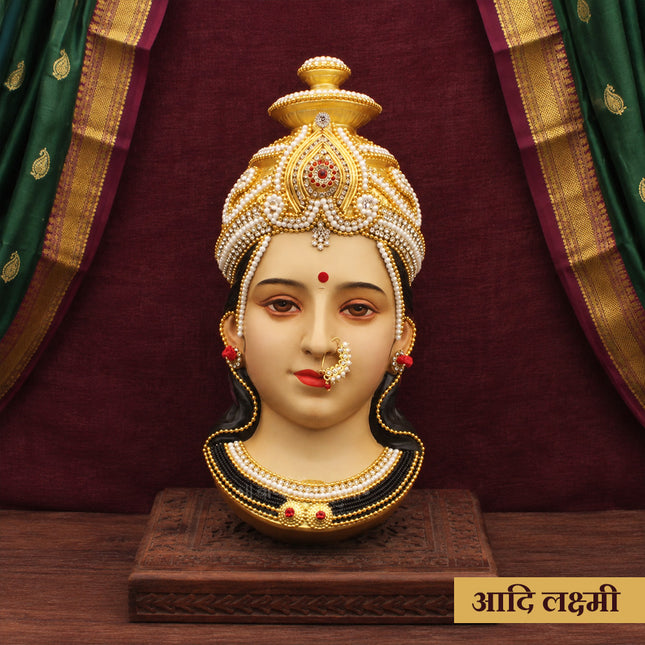

Adi Lakshmi Devi Face Mukhavata Shringar Pattern – Traditional Goddess Face for Navratri, Diwali, Margashirsha Guruvar Vrat and Lakshmi Puja(9.5 Inches Devi Mukh)
Adi Lakshmi Devi Face Mukhavata – Traditional Goddess Face for Lakshmi Puja, Navratri and Kalash Sthapana Traditional Significance of Adi Lakshmi Devi Adi Lakshmi is regarded as the primordial form of Goddess Lakshmi and is one of the revered forms of Ashta Lakshmi, the eight manifestations of Goddess Lakshmi. She represents the eternal and divine aspect of Goddess Lakshmi and is traditionally worshipped for spiritual well-being, peace, prosperity and abundance. The word Adi means the beginning or the original source. Adi Lakshmi is worshipped as the divine form from whom the blessings of the eight Lakshmi forms are celebrated. Devotees offer prayers to the Goddess with faith and devotion, seeking happiness, harmony and well-being for their families. Religious Importance of Adi Lakshmi Devi Mukhavata The Adi Lakshmi Devi Face Mukhavata represents the graceful form of Goddess Lakshmi. It can be used as a traditional decorative element during Lakshmi worship and household religious ceremonies. A beautifully decorated Devi Mukhavata holds a special place in traditional puja arrangements. It can be placed on a suitable stand, decorated platform or with a Kalash according to family customs. Adorn the Goddess with traditional sarees, Devi Poshak, jewellery, flowers, garlands and other Shringar accessories to create an elegant devotional setup. Adi Lakshmi – The First Form of Ashta Lakshmi Ashta Lakshmi refers to the eight revered forms of Goddess Lakshmi, each representing a different aspect of prosperity and well-being. Adi Lakshmi is considered the original and eternal form among these eight manifestations. The eight forms are: Adi Lakshmi: Represents the primordial and eternal form of Goddess Lakshmi. Dhana Lakshmi: Associated with wealth and material prosperity. Dhanya Lakshmi: Represents food, grains and nourishment. Gaja Lakshmi: Associated with royal prosperity, abundance and auspiciousness. Santana Lakshmi: Represents family well-being and children. Veera Lakshmi: Associated with courage, strength and bravery. Vijaya Lakshmi: Represents victory and success. Vidya Lakshmi: Represents knowledge, learning and wisdom. Suitable for Traditional Lakshmi Puja and Festive Occasions Margashirsha Guruvar Vrat: Suitable for traditional Goddess Lakshmi worship during the Thursdays of Margashirsha month. Diwali Lakshmi Puja: Can be included in the traditional home Lakshmi Puja arrangement. Navratri: Suitable for Goddess worship and festive Devi Shringar. Kalash Sthapana: Can be arranged with a decorated Kalash according to family rituals. Lakshmi Puja: Suitable for traditional household worship of Goddess Lakshmi. Varalakshmi Vrat: Can be included where followed by family tradition. Home Mandir Decoration: Adds a traditional devotional element to your puja space. Special Religious Occasions: Suitable for family pujas and auspicious celebrations. Traditional Adi Lakshmi Devi Shringar Create a beautiful Adi Lakshmi Devi Sthapana by decorating the Mukhavata with traditional Shringar accessories. You can pair it with: Traditional saree or Devi Poshak Red, green or golden Chunri Decorative necklaces and jewellery Nath and traditional earrings Flower garlands and fresh flowers Haldi-kumkum and puja essentials Decorative backdrops and traditional lighting Choose the decoration according to your preferred colour combination and family worship customs. A Traditional Addition to Your Home Temple The Adi Lakshmi Devi Face Mukhavata brings the beauty of traditional Goddess worship into your home. It can be used during Margashirsha Guruvar Vrat, Diwali Lakshmi Puja, Navratri and other special religious occasions. Create a graceful Goddess Shringar arrangement with traditional clothing, flowers, jewellery and decorative accessories while continuing the beautiful customs of Indian devotional culture. मार्गशीर्ष पूजा का केली जाते? हिंदू धर्मात मार्गशीर्ष महिना अत्यंत पवित्र मानला जातो. या महिन्यातील गुरुवारी देवी महालक्ष्मीची विशेष पूजा व व्रत केले जाते. घरातील सुख, शांती, समृद्धी आणि कुटुंबाच्या कल्याणासाठी महिला श्रद्धेने हे व्रत करतात. या दिवशी कलश स्थापना करून देवीचा मुखवटा साडी, दागिने आणि फुलांनी सजवला जातो. हळद-कुंकू, फुले व नैवेद्य अर्पण करून देवीची आरती केली जाते. देवी लक्ष्मीची कृपा आणि आशीर्वाद सदैव कुटुंबावर राहावेत, ही या पूजेच्या मागील भावना आहे. देवीचा मुखवटा कधी वापरतात? देवीचा मुखवटा हा देवीच्या दिव्य स्वरूपाचे प्रतीक मानला जातो. विविध सण, उत्सव आणि शुभ प्रसंगी मुखवटा कलशावर किंवा पूजेच्या विशेष जागी स्थापित करून देवीची आराधना केली जाते. मुखवटा वापरण्याचे प्रमुख प्रसंग: मार्गशीर्ष गुरुवार पूजा चैत्र व शारदीय नवरात्र महालक्ष्मी पूजा गौरी पूजन देवी जयंती व विशेष तिथी कलश स्थापना आणि घरगुती देवी पूजन Why Do We Use Devi Mukhota? A Devi Mukhota represents the divine face of the Goddess. It is traditionally placed on a Kalash or in a special puja area and decorated with a saree, jewellery, flowers and traditional shringar. Devotees worship the Mukhota with haldi, kumkum, flowers and naivedya. Why Do We Celebrate Margashirsha Lakshmi Puja Vrat? Margashirsha is considered an auspicious month for worshipping Goddess Mahalakshmi. In Maharashtra, women traditionally observe four Thursday fasts (Guruvar Vrat) during this month, praying for happiness, peace, prosperity and family well-being. During the puja, the Kalash is decorated with a Goddess Mukhota, saree, jewellery and flowers. Haldi, kumkum, fruits and traditional naivedya are offered, followed by aarti. Spiritual Significance Margashirsha Lakshmi Puja and Devi Mukhota worship represent faith, devotion and the preservation of traditional Indian customs. These rituals bring families together in prayer and express gratitude towards the Divine Mother Make: Made of fiber. Devi face Adron shringar Base with zardosi work, Diffrent colours, moti, stones. Note: tradtional hand made, colours stones zari moti work may vary. Dimension: 9.5 inches (Height) x 4 inches (Width) Weight: 275 grams approx
Rs. 2,450.00 Rs. 1,850.00
-


Adi Lakshmi Devi Face Mukhavata Moti Work Pattern – Traditional Goddess Face for Navratri, Diwali, Margashirsha Guruvar Vrat and Lakshmi Puja (10 inches Devi Mukh Height)
Adi Lakshmi Devi Face Mukhavata – Traditional Goddess Face for Lakshmi Puja, Navratri and Kalash Sthapana Traditional Significance of Adi Lakshmi Devi Adi Lakshmi is regarded as the primordial form of Goddess Lakshmi and is one of the revered forms of Ashta Lakshmi, the eight manifestations of Goddess Lakshmi. She represents the eternal and divine aspect of Goddess Lakshmi and is traditionally worshipped for spiritual well-being, peace, prosperity and abundance. The word Adi means the beginning or the original source. Adi Lakshmi is worshipped as the divine form from whom the blessings of the eight Lakshmi forms are celebrated. Devotees offer prayers to the Goddess with faith and devotion, seeking happiness, harmony and well-being for their families. Religious Importance of Adi Lakshmi Devi Mukhavata The Adi Lakshmi Devi Face Mukhavata represents the graceful form of Goddess Lakshmi. It can be used as a traditional decorative element during Lakshmi worship and household religious ceremonies. A beautifully decorated Devi Mukhavata holds a special place in traditional puja arrangements. It can be placed on a suitable stand, decorated platform or with a Kalash according to family customs. Adorn the Goddess with traditional sarees, Devi Poshak, jewellery, flowers, garlands and other Shringar accessories to create an elegant devotional setup. Adi Lakshmi – The First Form of Ashta Lakshmi Ashta Lakshmi refers to the eight revered forms of Goddess Lakshmi, each representing a different aspect of prosperity and well-being. Adi Lakshmi is considered the original and eternal form among these eight manifestations. The eight forms are: Adi Lakshmi: Represents the primordial and eternal form of Goddess Lakshmi. Dhana Lakshmi: Associated with wealth and material prosperity. Dhanya Lakshmi: Represents food, grains and nourishment. Gaja Lakshmi: Associated with royal prosperity, abundance and auspiciousness. Santana Lakshmi: Represents family well-being and children. Veera Lakshmi: Associated with courage, strength and bravery. Vijaya Lakshmi: Represents victory and success. Vidya Lakshmi: Represents knowledge, learning and wisdom. Suitable for Traditional Lakshmi Puja and Festive Occasions Margashirsha Guruvar Vrat: Suitable for traditional Goddess Lakshmi worship during the Thursdays of Margashirsha month. Diwali Lakshmi Puja: Can be included in the traditional home Lakshmi Puja arrangement. Navratri: Suitable for Goddess worship and festive Devi Shringar. Kalash Sthapana: Can be arranged with a decorated Kalash according to family rituals. Lakshmi Puja: Suitable for traditional household worship of Goddess Lakshmi. Varalakshmi Vrat: Can be included where followed by family tradition. Home Mandir Decoration: Adds a traditional devotional element to your puja space. Special Religious Occasions: Suitable for family pujas and auspicious celebrations. Traditional Adi Lakshmi Devi Shringar Create a beautiful Adi Lakshmi Devi Sthapana by decorating the Mukhavata with traditional Shringar accessories. You can pair it with: Traditional saree or Devi Poshak Red, green or golden Chunri Decorative necklaces and jewellery Nath and traditional earrings Flower garlands and fresh flowers Haldi-kumkum and puja essentials Decorative backdrops and traditional lighting Choose the decoration according to your preferred colour combination and family worship customs. A Traditional Addition to Your Home Temple The Adi Lakshmi Devi Face Mukhavata brings the beauty of traditional Goddess worship into your home. It can be used during Margashirsha Guruvar Vrat, Diwali Lakshmi Puja, Navratri and other special religious occasions. Create a graceful Goddess Shringar arrangement with traditional clothing, flowers, jewellery and decorative accessories while continuing the beautiful customs of Indian devotional culture. मार्गशीर्ष पूजा का केली जाते? हिंदू धर्मात मार्गशीर्ष महिना अत्यंत पवित्र मानला जातो. या महिन्यातील गुरुवारी देवी महालक्ष्मीची विशेष पूजा व व्रत केले जाते. घरातील सुख, शांती, समृद्धी आणि कुटुंबाच्या कल्याणासाठी महिला श्रद्धेने हे व्रत करतात. या दिवशी कलश स्थापना करून देवीचा मुखवटा साडी, दागिने आणि फुलांनी सजवला जातो. हळद-कुंकू, फुले व नैवेद्य अर्पण करून देवीची आरती केली जाते. देवी लक्ष्मीची कृपा आणि आशीर्वाद सदैव कुटुंबावर राहावेत, ही या पूजेच्या मागील भावना आहे. देवीचा मुखवटा कधी वापरतात? देवीचा मुखवटा हा देवीच्या दिव्य स्वरूपाचे प्रतीक मानला जातो. विविध सण, उत्सव आणि शुभ प्रसंगी मुखवटा कलशावर किंवा पूजेच्या विशेष जागी स्थापित करून देवीची आराधना केली जाते. मुखवटा वापरण्याचे प्रमुख प्रसंग: मार्गशीर्ष गुरुवार पूजा चैत्र व शारदीय नवरात्र महालक्ष्मी पूजा गौरी पूजन देवी जयंती व विशेष तिथी कलश स्थापना आणि घरगुती देवी पूजन Why Do We Use Devi Mukhota? A Devi Mukhota represents the divine face of the Goddess. It is traditionally placed on a Kalash or in a special puja area and decorated with a saree, jewellery, flowers and traditional shringar. Devotees worship the Mukhota with haldi, kumkum, flowers and naivedya. Why Do We Celebrate Margashirsha Lakshmi Puja Vrat? Margashirsha is considered an auspicious month for worshipping Goddess Mahalakshmi. In Maharashtra, women traditionally observe four Thursday fasts (Guruvar Vrat) during this month, praying for happiness, peace, prosperity and family well-being. During the puja, the Kalash is decorated with a Goddess Mukhota, saree, jewellery and flowers. Haldi, kumkum, fruits and traditional naivedya are offered, followed by aarti. Spiritual Significance Margashirsha Lakshmi Puja and Devi Mukhota worship represent faith, devotion and the preservation of traditional Indian customs. These rituals bring families together in prayer and express gratitude towards the Divine Mother Make: Made of fiber. Devi face Adron shringar Base with zardosi work, Diffrent colours, moti, stones. Note: tradtional hand made, colours stones zari moti work may vary. Dimension: 10 inches (Height) x 4 inches (Width) Weight: 275 grams approx
Rs. 2,150.00 Rs. 1,850.00


